How to Spot and Fix Common Car Fluid Leaks
Quick Summary
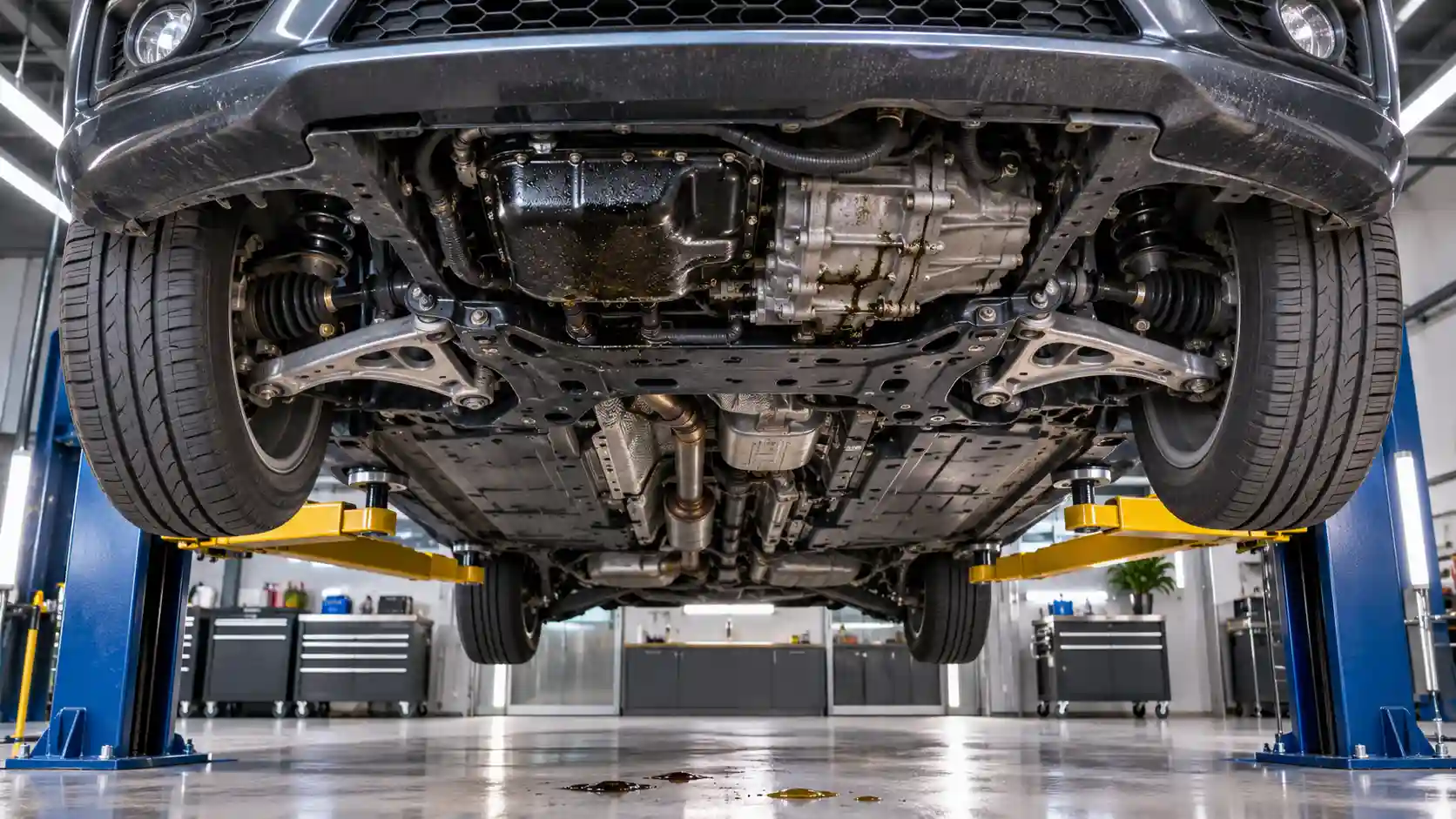
A puddle under a car usually points to a leak in the engine, cooling system, brakes, or transmission. Colour is the first clue. Engine oil runs brown or black, coolant can be green, pink, orange, or blue, and transmission fluid is often red. Clear water is normal AC drainage. Drivers can use this to judge a car fluid leak before booking a repair.
Have you noticed a wet spot under your car after parking it? A small puddle may look harmless, but it could be a sign of a problem with your engine, cooling system, brakes, or transmission. Ignoring a fluid leak can lead to expensive repairs and may even make your car unsafe to drive.
To spot a car fluid leak, first check the colour, smell, and location of the liquid under your car. Engine oil is usually brown or black, coolant can be green, pink, orange, or blue, and transmission fluid is often red or reddish-brown.
Next, inspect the hoses, seals, gaskets, and fluid reservoirs to find the source. Repair the damaged part, refill the system with the correct fluid, and check for further leaks.
Different car fluids have different jobs, so knowing how to identify them can help you understand the problem. Some leaks need a simple repair, while others require immediate attention from a mechanic.
Why Is Your Car Leaking Fluid?
Cars use different fluids to keep their parts working properly. Engine oil reduces friction, coolant controls engine temperature, and brake fluid helps transfer pressure to the brakes. Over time, seals, hoses, gaskets, and connections can wear out or become damaged.
Heat, vibration, road impacts, and old parts can make these problems worse. A leak may start slowly but become larger if the damaged part is not repaired.
Common reasons for fluid leaks include:
- Worn or damaged rubber hoses.
- Cracked fluid reservoirs.
- Loose drain plugs or connections.
- Damaged gaskets and seals.
- Corrosion in metal pipes and fittings.
- Loose oil filters or poorly fitted replacement parts.
- High pressure inside certain fluid systems.
Finding the source early can prevent fluid loss and protect expensive engine, transmission, and braking parts.
How to Identify Different Car Fluid Leaks
The colour, smell, texture, and location of a puddle can help you identify which fluid is leaking. However, fluid colours may change as they become old or mix with dirt. For example, fresh engine oil is usually amber, while used oil becomes dark brown or black. The location of a leak can also be misleading because liquid may travel along the underside of the car before reaching the ground.
Here is a quick guide to common car fluids:
| Car Fluid | Common Colour | Usual Location | Main Purpose |
|---|---|---|---|
| Engine oil | Amber, brown or black | Under the engine | Lubricates engine parts |
| Coolant | Green, pink, orange, blue, or yellow | Near the radiator or engine | Controls engine temperature |
| Transmission fluid | Red, reddish-brown, or sometimes amber | Around the gearbox | Lubricates and cools transmission parts |
| Brake fluid | Clear to light amber | Near wheels or master cylinder | Transfers braking pressure |
| Power steering fluid | Red, amber, or clear | Near steering components | Helps steering movement |
| Differential oil | Light brown to dark brown | Near axles or differential | Lubricates gears |
| Air conditioning water | Clear and odourless | Under the passenger area | Normal condensation from AC use |
Never identify a fluid by colour alone. Check its texture, smell, location, and reservoir level before deciding what needs repair.
Common Types of Car Fluid Leaks and How to Fix Them
Engine Oil Leaks: Causes and Fixes
Engine oil leaks are among the most common problems in cars. Oil moves through the engine to lubricate moving parts and reduce heat caused by friction.
A leak can develop when seals, gaskets, or the oil filter become worn or loose. Fresh engine oil is usually light amber, while used oil often appears dark brown or black. You may notice oily patches under the front or middle section of the car.
Common Causes of Engine Oil Leaks
An engine has several areas where oil leaks can develop. A damaged valve cover gasket can allow oil to escape from the top of the engine. A worn oil pan gasket may cause leaks underneath, while a loose drain plug or poorly fitted oil filter can release oil after servicing.
The crankshaft and camshaft seals can also wear out over time. Oil reaching hot engine parts may create a burning smell.
How to Fix an Engine Oil Leak
Start by checking the engine oil level using the dipstick or electronic oil level system. If the level is low, add the correct oil only if it is safe to do so. A mechanic should clean the engine area and inspect the likely leak points to find the exact source.
Depending on the damage, the repair may involve replacing a gasket, oil filter, drain plug washer, or seal. Avoid using random leak-stop products because they may not solve the actual problem.
Coolant Leaks: Causes and Fixes
Coolant helps keep the engine within its normal operating temperature. It moves through the radiator, engine passages, water pump, and hoses to carry heat away from the engine.
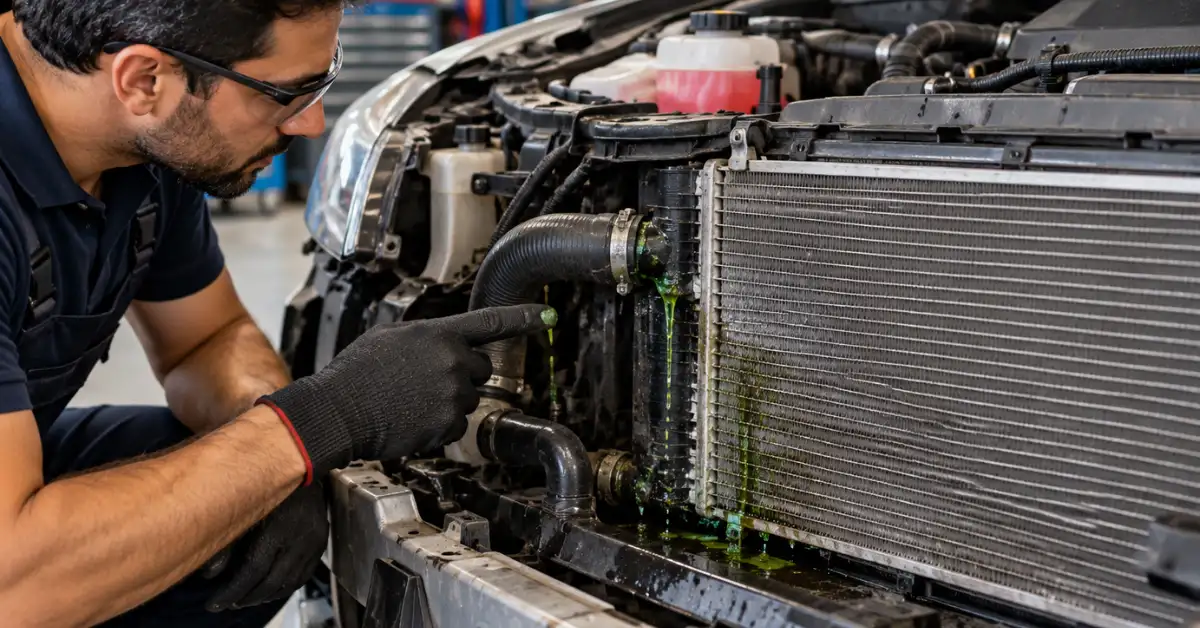
A coolant leak may leave a coloured puddle under the front of the car. You may also notice a sweet smell, a rising temperature gauge, or a low coolant warning. Ignoring this problem can cause overheating and serious engine damage.
Common Causes of Coolant Leaks
Coolant leaks often develop because of cracked radiator tanks, damaged hoses, loose clamps, or worn water pump seals. The radiator cap may also fail to hold the correct pressure, allowing coolant to escape. In some cases, a damaged thermostat housing or head gasket can cause coolant loss. White smoke from the exhaust, repeated overheating, or coolant mixing with car engine oil may indicate a more serious internal leak.
How to Fix a Coolant Leak
Never open the radiator cap or coolant reservoir when the engine is hot. Hot coolant is under pressure and can cause serious burns. Once the engine has cooled, check the coolant level and inspect visible hoses, connections, and the radiator for damage.
A mechanic can use a cooling system pressure test to locate hidden leaks. The repair may involve replacing a hose, radiator, water pump, cap, or gasket. Refill the system with the correct coolant mixture and remove trapped air according to the manufacturer's procedure.
Transmission Fluid Leaks: Causes and Fixes
Transmission fluid helps lubricate moving parts, control heat, and allow smooth gear changes. In automatic transmissions, it also plays an important role in hydraulic operation. A transmission fluid leak may leave a red or reddish-brown puddle under the middle or front section of the car.
However, some modern transmission fluids have different colours. Other warning signs include delayed gear changes, slipping gears, unusual noises, or a burning smell.
Common Causes of Transmission Fluid Leaks
Worn transmission seals are a common cause of fluid loss. A damaged transmission pan gasket, loose drain plug, cracked cooler line, or leaking hose connection can also allow fluid to escape.
In some cars, the leak may come from an axle seal or the area where the transmission connects to the engine. Low fluid levels can affect gear operation and increase heat inside the gearbox.
How to Fix a Transmission Fluid Leak
The first step is to locate the leak and check the transmission fluid level using the method specified by the manufacturer. Some modern cars do not have a regular transmission dipstick and need a special procedure to check the level.
A mechanic may replace the damaged seal, gasket, pan, or cooler line. The correct transmission fluid must be used because different gearboxes require different fluid types. Avoid driving if the transmission is slipping or losing a large amount of fluid.
Brake Fluid Leaks: Causes and Fixes
Brake fluid transfers pressure from the brake pedal to the braking components at each wheel. It is usually clear to light amber when fresh and may become darker as it ages.
A brake fluid leak is a serious safety problem because it can reduce braking pressure and make it difficult to stop the car. You may notice a soft brake pedal, a brake warning light, or wet patches near a wheel or under the master cylinder.
Common Causes of Brake Fluid Leaks
Brake fluid can escape through damaged brake hoses, corroded metal brake lines, worn caliper seals, or leaking wheel cylinders in cars with drum brakes. A faulty master cylinder can also allow fluid to leak near the brake booster or into the braking system.
Old rubber hoses may crack due to heat and age. Even a small leak should be treated seriously because the braking system depends on proper hydraulic pressure.
How to Fix a Brake Fluid Leak
Do not continue driving if you suspect a brake fluid leak or notice a soft brake pedal. Arrange for the car to be towed to a workshop. A mechanic should inspect the master cylinder, brake lines, hoses, calipers, and wheel cylinders.
The damaged part must be replaced, followed by the correct brake fluid refill and brake bleeding procedure to remove trapped air. The system should then be tested for leaks and proper braking pressure.
Power Steering Fluid Leaks: Causes and Fixes
Power steering fluid helps reduce the effort needed to turn the steering wheel in cars with hydraulic power steering. A leak may leave a red, amber, or clear oily patch near the front of the car.
You may notice a whining sound when turning, heavier steering, or a low fluid warning. Some newer cars use electric power steering and do not have a hydraulic fluid reservoir, so this type of leak does not apply to every vehicle.
Common Causes of Power Steering Fluid Leaks
Power steering fluid can leak from worn hoses, loose fittings, damaged seals, or a faulty steering rack. The pump may also develop a leak around its shaft seal or connections. Rubber hoses can become weak due to heat and regular pressure changes.
A leak near the steering rack may be harder to identify because fluid can collect around the rubber boots and nearby suspension parts.
How to Fix a Power Steering Fluid Leak
Check the power steering fluid level if your car has a hydraulic system. Use only the fluid type recommended by the manufacturer because some systems require specific hydraulic fluids or automatic transmission fluid.
A mechanic should inspect the pump, hoses, fittings, and steering rack. Depending on the source, the repair may require a new hose, seal, pump, or rack. After the repair, the system may need bleeding to remove trapped air.
Differential Oil Leaks: Causes and Fixes
The differential allows the wheels on the same axle to turn at different speeds when the car takes a corner. It uses gear oil to lubricate its internal gears and bearings.
A differential oil leak may leave a thick brown or dark oily patch near the rear axle or front differential, depending on the vehicle's design. You may also hear whining or humming sounds while driving if the fluid level becomes too low.
Common Causes of Differential Oil Leaks
Differential leaks often come from worn axle seals, pinion seals, damaged covers, or loose drain and fill plugs. Road impacts can damage the housing or its cover, while old seals may lose their ability to hold oil. In four-wheel-drive and all-wheel-drive cars, leaks can occur at more than one differential or transfer case.
How to Fix a Differential Oil Leak
A mechanic should inspect the housing, seals, cover, and plugs to find the source. A damaged gasket or seal may need replacement, while a cracked housing may require more extensive repair.
After fixing the leak, refill the differential with the correct gear oil and check the level. Do not ignore a differential leak because insufficient lubrication can damage gears and bearings, leading to expensive repairs.
Is Water Leaking Under Your Car Normal?
Not every puddle under a car indicates a problem. Clear, odourless water dripping from underneath the passenger area is often normal air conditioning condensation. When the AC runs, moisture from the air collects on the evaporator and drains outside through a small pipe.
This is especially common in hot and humid weather. The amount of water can change depending on humidity, temperature, and how long the AC has been running.
However, water leaking inside the cabin, wet carpets, or a blocked AC drain may indicate a problem. Coolant can sometimes be mistaken for water because it may have a light colour.
If the liquid feels oily, has a strong smell, or leaves a coloured mark, have it inspected. Clear water with no unusual smell is usually not a cause for concern when it comes from the normal AC drain.
How to Find the Source of a Car Fluid Leak?
Finding the exact source is important because the fluid may drip far from the damaged part. For example, oil can travel along the engine or underbody before falling onto the ground. A careful inspection can help narrow down the problem, but hidden leaks may require special tools.
Follow these steps:
- Park on a flat surface: Leave the car in a safe place and switch off the engine.
- Check the ground: Place clean cardboard under the car to see where the liquid collects.
- Check the fluid colour: Look at the stain and compare it with the usual colour of different car fluids.
- Notice the smell: Burning oil, sweet-smelling coolant, and strong gear oil odours can provide useful clues.
- Inspect fluid levels: Check the engine oil, coolant, brake fluid, and other accessible reservoirs when safe.
- Look for wet areas: Check visible hoses, seals, filters, and connections without touching hot parts.
- Get a professional inspection: Ask a mechanic to perform pressure testing or other leak detection checks if the source is not clear.
Never crawl under a car supported only by a hydraulic jack. Use approved jack stands or leave the inspection to a trained mechanic.
When Should You Stop Driving Because of a Fluid Leak?
Some leaks may allow you to drive a short distance to a workshop, but others need immediate attention. The type of fluid, leak size, and warning signs determine how serious the problem is.
Brake fluid leaks, heavy engine oil loss, and major coolant leaks can create dangerous conditions. Continuing to drive may damage the engine, gearbox, or braking system.
Stop driving and arrange professional help if you notice:
- A soft or sinking brake pedal.
- A rapidly rising engine temperature.
- A large amount of oil or coolant under the car.
- A low oil pressure warning light.
- Transmission slipping or sudden loss of gear operation.
- Heavy steering caused by power steering fluid loss.
- Smoke or a strong burning smell from the engine area.
If you are unsure which fluid is leaking, it is safer to have the car inspected rather than risk further damage.
Frequently Asked Questions
What colour is a brake fluid leak?
Brake fluid is clear to light amber when fresh and grows darker as it ages. It usually appears near a wheel or under the master cylinder. A soft brake pedal or a brake warning light alongside the patch means the car should not be driven to the workshop.
Why is there clear water under my car after using the AC?
Clear, odourless water under the passenger area is normal air conditioning condensation. Moisture from the air collects on the evaporator and drains outside through a small pipe. The amount changes with humidity and how long the AC has run. Wet carpets inside the cabin are a different problem.
Can I drive with a small oil leak?
A small oil leak may allow a short drive to a workshop, but the level must be checked first. Heavy oil loss or a low oil pressure warning light means stopping right away. Oil reaching hot engine parts can also create a burning smell.
How do mechanics find a hidden coolant leak?
Mechanics use a cooling system pressure test to find leaks that are not visible. The test pressurises the system so escaping coolant shows up at the damaged hose, radiator, water pump, or gasket. We use this check because coolant can travel along the underbody before it drips.
Is it safe to open the radiator cap to check for a leak?
No. Hot coolant sits under pressure and can cause serious burns. Wait until the engine has fully cooled before opening the radiator cap or coolant reservoir. Checking the level in the expansion tank when the engine is cold is the safe way to spot coolant loss.
Conclusion
Spotting a car fluid leak early can help protect your engine, gearbox, brakes, and other important parts. Start by checking the colour, smell, and location of the liquid under your car.
Engine oil leaks may come from gaskets or seals, coolant leaks often involve hoses or the radiator, and transmission fluid can escape through worn seals or damaged connections. Brake fluid leaks require immediate attention because they can affect stopping power.
To fix a leak, identify the damaged part, replace it with the correct component, refill the system with the recommended fluid, and check for further leaks. Never ignore warning lights, overheating, or changes in braking and steering.
Need Help Fixing a Car Fluid Leak in the UAE?
If you notice an oily patch, coolant loss, or a warning light on your dashboard, get your car inspected before the problem becomes more serious. 800Sayara provides car repair and maintenance services at UAE workshop locations. Its mechanics can inspect leaking systems, identify damaged parts, and recommend suitable repairs.
Contact 800Sayara to book a car inspection and get professional help with fluid leaks, engine problems, cooling system repairs, and other car maintenance needs.
Need a trusted garage in the UAE?
Book expert car service with 800Sayara in Dubai, Abu Dhabi and Sharjah.
Book Appointment