How to Repair a Radiator Leak: Simple Steps to Fix and Prevent Damage
A radiator leak can cause serious engine problems if it is not fixed in time. Even a small leak can lead to coolant loss, engine overheating, and costly repairs. This is especially important for drivers in the UAE, where high temperatures put extra pressure on the cooling system.
To repair a radiator leak, first park the car safely, switch off the engine, and let it cool completely. Check the radiator, hoses, clamps, and nearby parts for signs of coolant leakage.
Identify the source of the leak and decide whether a temporary repair or professional replacement is needed. Refill the cooling system with the correct coolant only after the leak has been properly addressed. Finally, check the coolant level and temperature while monitoring the system for further leaks.
However, not every radiator leak can be repaired at home. A cracked radiator, damaged plastic tank, or leaking internal part may need professional attention. Understanding the cause and using the right repair method can help protect the engine and prevent further damage.
What Causes a Radiator Leak?
A car radiator transfers heat from the engine coolant to the outside air. Over time, heat, pressure, corrosion, and physical damage can affect its condition. When the radiator or its connected parts develop cracks or weak points, coolant can escape.
Common causes include damaged radiator fins, worn seals, loose hose clamps, rust, and cracked plastic tanks. Using the wrong coolant or mixing incompatible coolant types can also increase the risk of corrosion and deposits inside the cooling system.
In the UAE, high temperatures and long periods of driving with heavy air-conditioning use can add stress to the cooling system. Regular inspection helps detect small problems before they become major repairs.
Signs of a Leaking Car Radiator
A radiator leak is not always easy to notice at first. Sometimes, coolant escapes slowly and leaves only a small mark under the vehicle. In other cases, a damaged radiator can lose coolant quickly and cause the engine temperature to rise within minutes.
Watch for these common warning signs:
- Coolant puddles: Bright green, orange, pink, yellow, or other coolant-coloured liquid may appear under the front of the car.
- Low coolant level: The coolant reservoir may need frequent refilling.
- Engine overheating: The temperature gauge may rise above its normal range.
- Sweet smell: Coolant often has a sweet chemical smell.
- Steam from the bonnet: Escaping coolant may create steam around the engine bay.
- Visible radiator damage: Cracks, wet areas, corrosion, or dried coolant deposits may appear on the radiator.
If the engine overheats or coolant is leaking heavily, stop driving as soon as it is safe. Continuing to drive can cause severe engine damage.
How to Repair a Radiator Leak Step by Step?
Repairing a radiator leak starts with finding its exact source. The correct solution depends on whether the leak comes from a hose, clamp, radiator core, tank, or another cooling system component.
Always work with a fully cooled engine. Never open a hot radiator cap because pressurised coolant can spray out and cause serious burns.
Step 1: Park the Car and Let the Engine Cool
Park your car on a flat surface and switch off the engine. Apply the parking brake and wait until the engine has cooled completely. This may take a considerable amount of time, especially after driving in hot weather.
Do not open the radiator cap or coolant reservoir while the engine is hot or pressurised. Hot coolant can cause serious burns. Once the engine is cool, you can begin checking the cooling system. Keep children and pets away from spilled coolant because it can be harmful if swallowed.
Step 2: Find the Source of the Leak
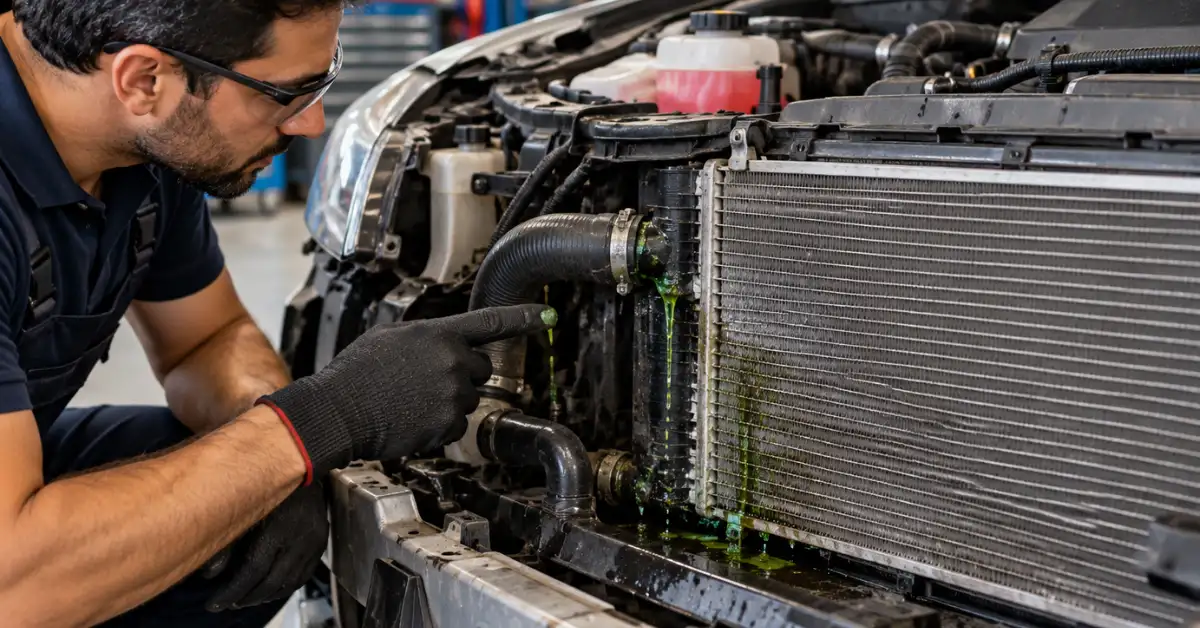
Open the bonnet and inspect the radiator and surrounding parts. Look for wet spots, cracks, corrosion, loose connections, and dried coolant marks.
Check the upper and lower radiator hoses, hose clamps, radiator seams, and plastic end tanks. A leak may also come from the water pump, thermostat housing, or another cooling system component.
This is why it is important to identify the actual source before making repairs. If the leak is difficult to locate, a workshop can use a cooling system pressure tester to find the problem more accurately.
Step 3: Check the Radiator Hoses and Clamps
Radiator hoses carry hot coolant between the engine and radiator. Over time, heat and pressure can make the rubber hard, weak, or cracked. A loose clamp can also allow coolant to escape around a hose connection.
If a hose is damaged, it usually needs replacement rather than a temporary patch. A loose clamp may need to be tightened or replaced, depending on its condition and the manufacturer's specifications.
Never overtighten a clamp, as this can damage the hose or connection. Make sure the engine is fully cool before touching any cooling system parts.
Step 4: Use a Suitable Temporary Radiator Repair Product
Some small leaks may be temporarily reduced with a radiator sealant designed for the vehicle's cooling system. These products are added according to the label instructions and may help seal certain minor leaks.
However, sealants are not a permanent solution for every radiator problem. They may fail to stop larger leaks and can sometimes cause blockages in narrow cooling passages if the product is unsuitable or used incorrectly.
Avoid using household adhesives, glue, or other materials that are not made for automotive cooling systems. If the radiator is cracked or badly damaged, professional repair or replacement is generally necessary.
Step 5: Repair or Replace the Damaged Radiator
The right repair depends on the type and location of the damage. A loose connection or a damaged hose may be fixed by replacing the affected part. Some metal radiators with small cracks may be repairable by a specialist, depending on their design and condition.
However, a cracked plastic tank, badly corroded radiator, or large hole often requires radiator replacement.
Modern radiators can have plastic and aluminium parts that are difficult to repair reliably at home. A professional inspection helps determine whether a repair will last or if a new radiator is needed.
Step 6: Refill the Cooling System With the Correct Coolant
After the leak has been properly fixed, refill the cooling system using the coolant recommended by your vehicle manufacturer. Different vehicles require different coolant types, and mixing incompatible products can cause deposits or reduce corrosion protection.
Follow the owner's manual for the correct filling procedure. Some cars require a special bleeding process to remove trapped air from the cooling system. Air pockets can reduce coolant flow and cause overheating even when the radiator is no longer leaking.
Never use plain water as a permanent replacement for the recommended coolant, particularly in the UAE's hot climate.
Step 7: Check for Further Leaks
Once the repair and coolant refill are complete, check the radiator, hoses, and connections for signs of leakage. Some vehicles require a specific bleeding procedure or a controlled engine-running test to confirm that coolant is circulating properly.
Monitor the temperature gauge and check the coolant level again after the engine has cooled. If you notice a rising temperature, coolant loss, or fresh wet spots, stop using the vehicle and arrange a professional inspection. A successful repair should restore normal cooling system operation without repeated coolant loss or overheating.
Can You Drive With a Leaking Radiator?
Driving with a leaking radiator is risky because the engine depends on coolant to control its operating temperature. Even a small leak can become worse under pressure, especially during long trips or in heavy traffic.
If the coolant level drops too low, the engine may overheat and suffer damage to the cylinder head, head gasket, or other internal parts.
If you notice a coolant warning light, steam, or a high temperature reading, pull over safely and switch off the engine. Do not open the radiator cap while it is hot. If the leak is significant or the engine has overheated, arrange roadside assistance instead of continuing to drive.
How to Prevent Radiator Leaks?
Regular cooling system maintenance can help prevent radiator leaks and reduce the risk of engine overheating. Radiators are exposed to heat, vibration, pressure, and dirt throughout their working life. Checking their condition during routine servicing helps identify weak parts before they fail.
Follow these maintenance tips:
- Inspect coolant levels: Check the coolant reservoir regularly when the engine is cold.
- Use the correct coolant: Follow the manufacturer's recommendations for coolant type and replacement intervals.
- Check radiator hoses: Look for cracks, swelling, soft spots, and loose connections.
- Clean the radiator area: Remove leaves and dirt that block airflow through the radiator fins, without damaging them.
- Check for corrosion: Look for rust, deposits, or damaged areas around the radiator and connections.
- Service the cooling system: Follow the recommended maintenance schedule and replace worn parts when needed.
These simple checks can help keep the cooling system in good condition and reduce the chance of an unexpected breakdown.
Can a Radiator Leak Cause an Engine Misfire?
A radiator leak can lead to engine overheating if the coolant level drops too low. Severe overheating may damage the head gasket, cylinder head, or other engine parts. In some cases, this damage can allow coolant to enter the combustion chamber, affecting how the engine burns fuel and causing an engine misfire.
Common signs include rough idling, shaking, poor acceleration, and a flashing check engine light. If these symptoms appear along with coolant loss, stop driving and get the vehicle inspected. Early diagnosis can help prevent further engine damage and costly repairs.
Why Radiator Maintenance Is Important in the UAE
The UAE's hot climate makes a healthy cooling system especially important. During summer, outdoor temperatures can rise above 40°C, while the temperature inside the engine bay can become even higher. These conditions place extra stress on the radiator, coolant, hoses, and other cooling system parts.
Long drives, traffic jams, and frequent stops can also make it harder for the engine to release heat. A radiator that is partially blocked or losing coolant may struggle to keep the engine at a safe temperature. Regular inspections, correct coolant levels, and timely repairs can help prevent overheating and protect the engine.
When Should You Get Professional Radiator Repair?
Some radiator problems are too serious for home repairs. Large cracks, heavy corrosion, repeated coolant loss, and overheating after a previous repair are signs that your car needs professional attention.
A workshop can inspect the radiator and test the entire cooling system to identify hidden problems. Professional technicians may use pressure testing to find leaks, check the thermostat, inspect the water pump, and examine the radiator fan.
They can also check for internal leaks that may not leave visible coolant marks under the car. Getting the right diagnosis helps avoid unnecessary part replacements and reduces the risk of further engine damage.
Conclusion
A radiator leak should never be ignored because it can lead to engine overheating and expensive repairs. Finding the source of the leak, checking hoses and connections, and using the correct repair method are important steps. Small problems may need simple part replacements, while major radiator damage often requires professional repair or a new unit.
In the UAE, regular cooling system checks are especially important because high temperatures place extra pressure on engine parts. If your vehicle is losing coolant, showing signs of overheating, or developing a radiator leak, arrange an inspection as soon as possible.
Need professional radiator repair in the UAE? Contact 800Sayara for expert car repair and maintenance services. Its technicians can inspect your vehicle's cooling system, identify radiator problems, and help you get back on the road safely.
Need a trusted garage in the UAE?
Book expert car service with 800Sayara in Dubai, Abu Dhabi and Sharjah.
Book Appointment