How to Jump Start a Car in the UAE: A Step-by-Step Guide
A dead car battery can leave you stranded in a parking lot, at home, or on a busy UAE road. High temperatures, frequent short trips, and old batteries can increase the risk of battery failure. Knowing what to do can save time and reduce stress.
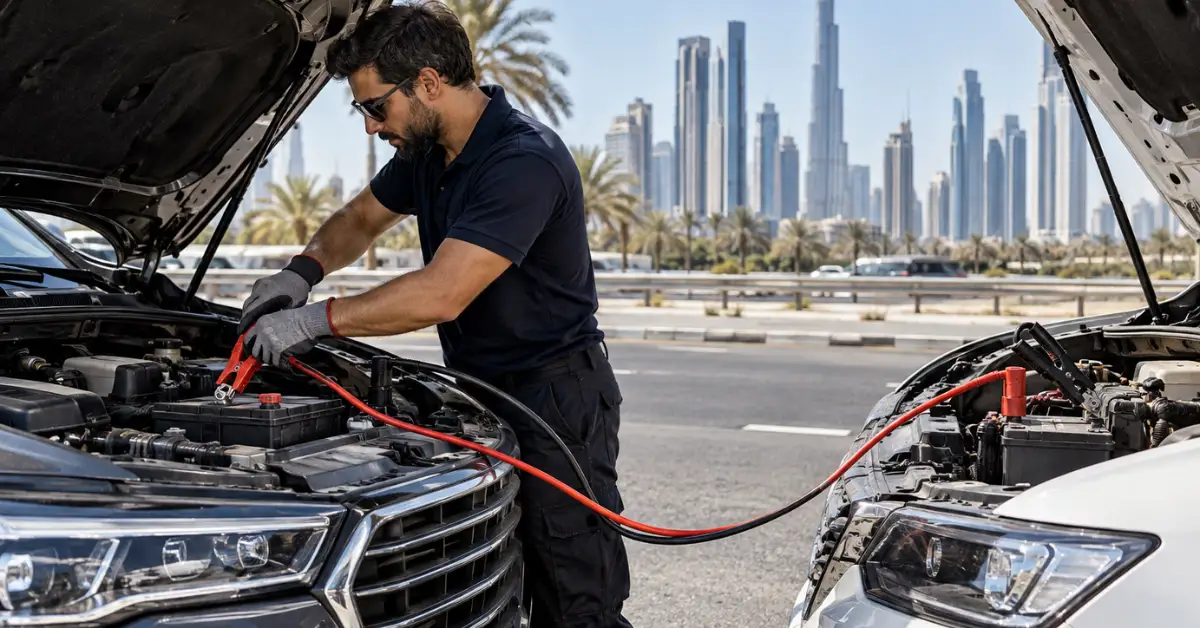
To jump-start a car in the UAE, park a working vehicle close to the car with the dead battery, but make sure the vehicles do not touch. Turn off both engines and connect the jumper cables in the correct order.
Start the working car and then try starting the car with the dead battery. Once it starts, remove the cables safely in reverse order, then let the engine run for a while to help recharge the battery.
However, the process requires care. Incorrect connections can damage the car's electrical system, cause sparks, or even lead to a battery explosion. Understanding the correct steps and safety rules is important before using jumper cables.
Why Do Car Batteries Die in the UAE?
The UAE's hot climate can put extra pressure on car batteries. High temperatures speed up chemical reactions inside the battery, which can increase water loss and damage internal parts. Over time, this reduces the battery's ability to hold a charge.
Frequent short trips can also cause battery problems. When a car is driven for only a few minutes, the alternator may not have enough time to replace the power used during starting. Leaving lights or other electrical parts on while the engine is off can drain the battery as well.
Common reasons for a dead car battery include:
- Extreme heat and long exposure to sunlight.
- Old or damaged batteries.
- Leaving headlights or interior lights on.
- Loose or corroded battery terminals.
- Faulty alternators that do not charge the battery properly.
- Long periods without driving.
What Do You Need to Jump-Start a Car?
Before you begin, make sure you have the right equipment. The most common method uses a set of jumper cables and another vehicle with a healthy battery. You can also use a portable jump starter, which is useful when another vehicle is not available.
Jumper cables usually have red and black clamps. The red cable connects to the positive (+) battery terminals, while the black cable connects to the negative (-) terminal or a suitable grounding point, depending on the vehicle's instructions.
Here is what you need:
- Jumper cables: Choose cables that are long enough to reach both batteries and have suitable current capacity.
- A working vehicle: The battery should have enough charge to help start the other car.
- Safety gloves: These help protect your hands while handling the cables.
- Safety glasses: These offer protection against sparks or battery acid.
- Vehicle owner's manual: Check the recommended jump-starting points and safety instructions.
Some modern cars have special jump-start terminals instead of direct battery connections. Always check the owner's manual before connecting the cables.
How to Jump Start a Car in UAE: Step-by-Step Instructions
Following the correct order is important when connecting jumper cables. A small mistake can cause sparks, electrical damage, or injury. Before starting, park both vehicles on safe, level ground and keep them away from moving traffic. Switch off the ignition, lights, air conditioning, and other electrical devices. Make sure both vehicles use compatible battery systems and follow their manufacturers' instructions.
Step 1: Park Both Cars Safely
Park the working car close enough for the jumper cables to reach the dead battery. Keep both vehicles from touching each other. Put automatic cars in Park and manual cars in Neutral. Apply the parking brakes and switch off both engines.
If the car has stopped on a busy road, do not attempt a jump-start in a dangerous location. Move to a safe area if possible or call roadside assistance. In the UAE, road safety should always come first, especially on highways and busy city roads.
Step 2: Locate the Battery and Check Its Condition
Open the bonnet of both vehicles and locate the batteries or designated jump-starting terminals. Look for the positive (+) and negative (-) markings. Remove any protective covers if the owner's manual allows it.
Before connecting anything, check the dead battery for visible damage. Do not attempt to jump-start a battery that is swollen, leaking, cracked, or showing signs of freezing.
A damaged battery can release harmful gases or cause an explosion. If you notice corrosion around the terminals, avoid touching the deposits with bare hands.
Step 3: Connect the Red Jumper Cable
Take the red jumper cable and attach one clamp to the positive (+) terminal of the dead battery or its designated positive jump-starting point. Connect the other red clamp to the positive (+) terminal of the working battery.
Make sure both clamps have a firm connection and cannot slip off. Keep the cable away from moving engine parts, fans, and belts. Never let the metal clamps touch each other while they are connected to a battery. Incorrect connections can cause short circuits and damage sensitive electrical parts.
Step 4: Connect the Black Jumper Cable
Attach one end of the black jumper cable to the negative (-) terminal of the working battery. Connect the other black clamp to an approved, unpainted metal grounding point on the vehicle with the dead battery, if the manufacturer recommends it.
A suitable grounding point helps reduce the risk of sparks near the battery. Do not connect the final clamp to the negative terminal of the dead battery unless the vehicle manufacturer's instructions specifically require it. Keep all cables clear of hot surfaces and moving engine parts.
Step 5: Start the Working Car
Start the engine of the vehicle with the healthy battery. Let it run for a few minutes, following the vehicle manufacturer's instructions. This allows the working electrical system to supply power to the weak battery.
Do not press the accelerator hard or keep revving the engine unnecessarily. A steady engine speed is usually enough for a standard jump-start. If the working car has a smart charging system or a special battery setup, follow its manual because the recommended procedure may be different.
Step 6: Start the Car with the Dead Battery
Try starting the vehicle with the weak battery. Turn the ignition and allow the starter motor to crank for a few seconds. If the engine does not start, wait briefly before trying again.
Avoid repeated long cranking attempts because they can overheat the starter motor and drain the working battery. If the vehicle fails to start after a few attempts, stop and check the connections. The problem may not be the battery. A faulty starter motor, damaged wiring, or another mechanical issue may prevent the engine from starting.
Step 7: Remove the Jumper Cables Safely
Once the dead car starts, remove the cables in the reverse order of connection. Keep the clamps from touching each other or any metal parts while removing them.
Follow this order:
- Remove the black clamp from the grounded point on the previously dead car.
- Remove the black clamp from the working battery.
- Remove the red clamp from the working battery.
- Remove the red clamp from the previously dead battery.
Keep the cables away from fans, belts, and other moving parts. Close the bonnet only after the cables and tools have been removed safely.
Step 8: Keep the Engine Running
After the car starts, keep the engine running for around 20 to 30 minutes if the vehicle manufacturer's instructions allow it. This gives the alternator time to recharge the battery to some extent.
However, idling does not always fully recharge a deeply discharged battery. Driving for a suitable period may help, but the charging system and battery condition affect the result.
Avoid switching off the engine immediately after a successful jump-start. If the car struggles to start again, get the battery and charging system tested by a qualified technician.
Important Safety Tips Before Jump-Starting a Car
Jump-starting is a simple process when done correctly, but batteries can be dangerous. They contain acid and can release flammable hydrogen gas. A wrong connection or damaged battery can lead to sparks, burns, or serious injury.
Keep these safety tips in mind:
- Check the voltage: Most regular passenger cars use 12V batteries. Do not connect vehicles with incompatible electrical systems.
- Avoid smoking: Keep cigarettes, flames, and anything that can create sparks away from the battery.
- Wear protection: Use safety glasses and gloves when handling jumper cables.
- Follow the manual: Modern cars may have special connection points and specific jump-starting instructions.
- Do not touch moving parts: Keep cables and hands away from engine fans and belts.
- Never force a connection: Stop if the terminals or clamps do not fit correctly.
- Watch for warning signs: Stop immediately if you notice smoke, a burning smell, unusual heat, or sparks beyond a small initial connection spark.
If anything seems unsafe, stop the process and contact a professional.
How to Jump-Start a Car in Extreme UAE Heat
High temperatures make battery care especially important in the UAE. When a car is parked under direct sunlight for several hours, the heat under the bonnet can become intense. This may increase battery wear and reduce its overall lifespan.
Before attempting a jump-start in hot weather, park in a safe, shaded area if possible. Allow the engine to cool if it is overheating. Never pour water over a hot battery or engine to cool it down. Check for swelling, leaks, and damaged cables before connecting anything.
If the battery appears damaged or unusually hot, do not jump-start it. Contact roadside assistance instead. Regular battery testing can also help prevent unexpected breakdowns during the hottest months.
Can You Jump-Start Modern, Hybrid, or Start-Stop Cars?
Not every vehicle follows the same jump-starting process. Modern cars often have sensitive electronic systems, and some use special battery layouts. Vehicles with start-stop technology may have AGM or EFB batteries that require specific charging and jump-starting methods.
Hybrid and electric vehicles need extra care. Some have a separate 12V battery that powers their electrical systems.
A suitable jump-start may be possible for this battery, but the high-voltage battery must never be used for this purpose. Always follow the manufacturer's instructions. If you are unsure about the correct connection points, ask a trained technician for help.
How to Use a Portable Jump Starter?
A portable jump starter is a useful tool for drivers who do not want to depend on another vehicle. It contains a built-in battery that can provide enough power to start a car with a weak battery. Many models also include safety features such as reverse-polarity protection and short-circuit protection.
To use one, follow these steps:
- Turn off the car and all electrical devices.
- Connect the red clamp to the positive (+) terminal.
- Connect the black clamp to the recommended grounding point.
- Switch on the jump starter if required.
- Start the vehicle according to the device instructions.
- Disconnect the clamps safely and switch off the device.
Choose a model that supports your vehicle's battery voltage and engine size. Keep it charged and store it according to the manufacturer's instructions.
What to Do If Your Car Does Not Start After a Jump?
If your car does not start after a proper jump-start attempt, the battery may not be the only problem. A deeply discharged battery may need professional charging or replacement. The starter motor, alternator, wiring, or battery terminals could also be faulty.
Pay attention to the signs your car shows. A clicking noise may point to a weak battery or a starter problem. Dim headlights can indicate low battery power. If the engine starts but the battery warning light stays on, the charging system may need inspection.
Do not continue trying to start the car repeatedly. A professional battery test and electrical system inspection can help find the actual cause.
How to Prevent a Dead Car Battery in the UAE?
Regular maintenance can reduce the risk of sudden battery failure. Since UAE temperatures can speed up battery wear, drivers should pay attention to battery age, charging performance, and electrical connections.
Follow these simple habits:
- Test the battery regularly: Get it checked every few months, especially before summer.
- Check the battery terminals: Make sure the connections are clean and tight.
- Avoid leaving lights on: Switch off headlights and interior lights before leaving the car.
- Drive regularly: Avoid leaving the vehicle unused for long periods.
- Inspect the alternator: Make sure it charges the battery within the correct voltage range.
- Replace old batteries: Do not wait for a complete failure if the battery is nearing the end of its expected life.
A healthy battery helps your car start reliably and reduces the chance of being stranded in extreme weather.
When Should You Call Roadside Assistance?
Sometimes, calling a professional is safer than trying to jump-start a car yourself. If your battery is damaged, your vehicle has special electrical requirements, or the engine does not start after a few attempts, professional help is the right choice.
Roadside assistance is also useful if your car breaks down on a highway or in an unsafe location. A trained technician can check the battery, inspect the charging system, and provide a suitable solution.
Depending on the problem, the service may include a jump-start, battery replacement, or vehicle recovery. Getting expert help can also prevent damage to expensive electrical parts in modern vehicles.
Get Professional Car Battery Assistance from 800Sayara
A dead battery can interrupt your day, especially when you are travelling in the UAE's extreme heat. Knowing how to jump-start a car in UAE conditions can help you handle minor battery problems safely. However, a jump-start is only a temporary solution if the battery is old, damaged, or unable to hold a charge.
If your car refuses to start or needs a battery replacement, 800Sayara offers professional car battery services and roadside assistance. Its technicians can help inspect your battery, identify charging problems, and provide the support your vehicle needs. Contact 800Sayara for reliable car battery assistance and get back on the road with less stress.
Need a trusted garage in the UAE?
Book expert car service with 800Sayara in Dubai, Abu Dhabi and Sharjah.
Book Appointment